Guides
Top plumbing contractor services options compared and reviewed
A review of the named plumbing contractor services a homeowner or property manager actually chooses between, and what each emergency repair option is for.
What to take away
- The plumbing contractor services below are the jobs customers actually shop for: drain clearing, camera inspection, water heater replacement and backwater valve installation.
- Repiping and commercial service contracts round out the list. Each job has a different buyer, a different pricing model and a different failure mode, which is why quotes come back incomparable.
- Roto-Rooter, Mr. Rooter and Benjamin Franklin Plumbing sell a franchise process, a call center and a warranty. Independent shops sell the owner's judgment. Both are legitimate, and they suit different jobs.
- On price, Roto-Rooter and Mr. Rooter quote a flat rate for a main line clearing, typically $100 to $350 (USD). A local shop quotes from the same range, usually at the low end.
- A franchise wins on an overnight emergency, where the call center and the dispatch coverage are the product. For a planned job the independent usually costs less. Warranty terms differ by branch, so compare the labor warranty in writing.
- Rheem, A. O. Smith and Bradford White build most residential tanks. Uponor and Viega supply most repipe material. The installer matters more than the brand in both cases.
- Diagnosis is a separate service from repair in every serious catalog. Folding it into the repair price is the most expensive habit in the trade.
- Ask for the license number, the permit puller, and the warranty terms in writing before comparing a single price.
The services customers actually compare
When someone searches for plumbing contractor services, they are rarely shopping a category. They are shopping one of six jobs, and each job has its own market and its own named suppliers.
Six Jobs Customers Compare
Service
- Drain clearing
- Homeowner, restaurant
- Camera inspection
- Buyer, property manager
- Water heater replacement
- Homeowner, landlord
- Backwater valve
- Basement owner
- Repiping
- Older home owner
- Commercial contract
- Property manager
Typical buyer
- Drain clearing
- $100-$350
- Camera inspection
- $150-$450
- Water heater replacement
- $1,200-$2,500
- Backwater valve
- $2,500-$6,000
- Repiping
- $4,000-$15,000
- Commercial contract
- $200-$2,000/mo
Price range
- Drain clearing
- Camera inspection
- Water heater replacement
- Backwater valve
- Repiping
- Commercial contract
Services customers actually compare
Typical buyer
- Drain clearing, sold by Roto-Rooter, Mr. Rooter and ARS
- Homeowner, restaurant
- Camera inspection, sold by Roto-Rooter, Drain Doctor and independent sewer firms
- Buyer, property manager
- Water heater replacement, using Rheem, A. O. Smith or Bradford White units
- Homeowner, landlord
- Backwater valve installation, using Zurn, Watts or Sioux Chief valves
- Basement owner
- Repiping in Uponor PEX or Viega press fittings
- Older home owner
- Commercial service contract, sold by ServiceMaster, ABM, EMCOR and Limbach
- Property manager
How it is priced
- Drain clearing, sold by Roto-Rooter, Mr. Rooter and ARS
- Flat rate per fixture or per line, typically $100 to $350 (USD)
- Camera inspection, sold by Roto-Rooter, Drain Doctor and independent sewer firms
- Flat fee per run, typically $150 to $450 (USD)
- Water heater replacement, using Rheem, A. O. Smith or Bradford White units
- Flat labor plus unit, typically $1,200 to $2,500 (USD) for a 40 to 50 gallon gas tank
- Backwater valve installation, using Zurn, Watts or Sioux Chief valves
- Flat rate plus permit, typically $2,500 to $6,000 (USD) with concrete cutting
- Repiping in Uponor PEX or Viega press fittings
- Per fixture or per linear foot, typically $4,000 to $15,000 (USD) for a whole house
- Commercial service contract, sold by ServiceMaster, ABM, EMCOR and Limbach
- Monthly retainer plus labor, typically $200 to $2,000 (USD) a month per building
What goes wrong
- Drain clearing, sold by Roto-Rooter, Mr. Rooter and ARS
- Line is broken, not blocked
- Camera inspection, sold by Roto-Rooter, Drain Doctor and independent sewer firms
- Findings not delivered in writing
- Water heater replacement, using Rheem, A. O. Smith or Bradford White units
- Permit and venting skipped
- Backwater valve installation, using Zurn, Watts or Sioux Chief valves
- Bylaw rebate paperwork missed
- Repiping in Uponor PEX or Viega press fittings
- Drywall repair excluded
- Commercial service contract, sold by ServiceMaster, ABM, EMCOR and Limbach
- Response time not defined
The rest of this article reviews each job by name, with the companies that sell it, who it suits, and what it costs.
Drain clearing and sewer cleaning
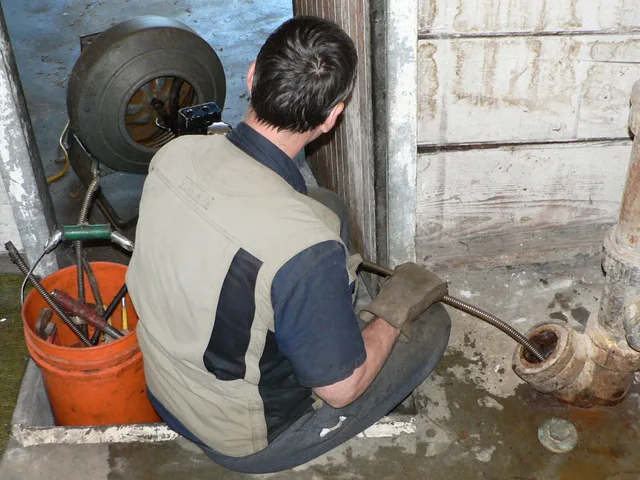
Roto-Rooter is the largest drain and plumbing service name in North America. The company was founded in Cincinnati in 1935 and is owned by Chemed Corporation. It sells flat-rate clearing through company-owned branches and franchises, with a national call center that answers overnight.
Mr. Rooter, a Neighborly brand based in Waco, Texas, sells the same job through locally owned franchises with published flat rates. Benjamin Franklin Plumbing, also part of Neighborly, sells plumbing repair on the same franchise model and advertises an on-time guarantee.
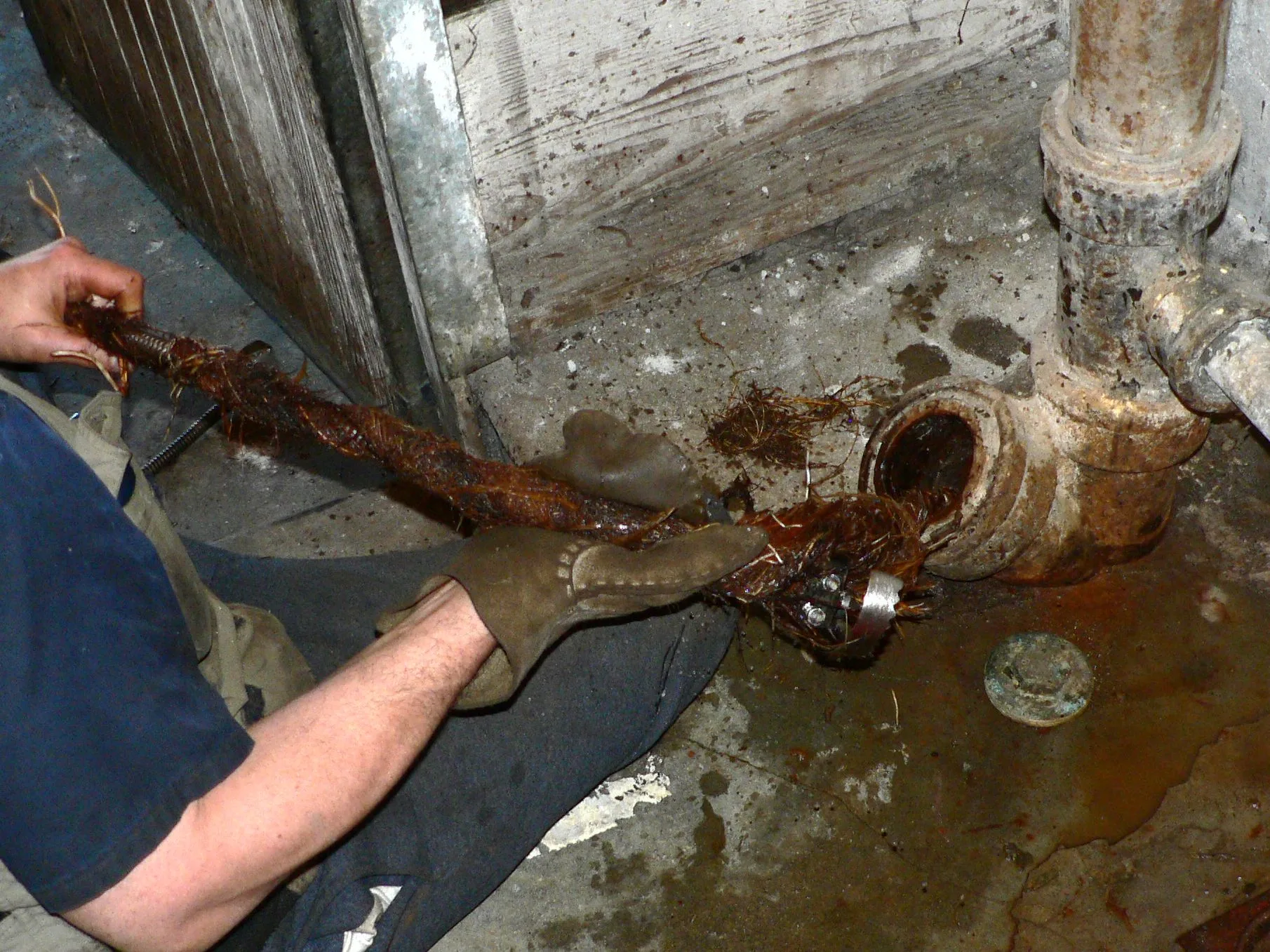
ARS and Rescue Rooter, the service brands of American Residential Services in Memphis, run 24-hour dispatch in most large metros. Independent shops in most Canadian and American cities sell drain clearing at comparable or lower rates, with the owner often on the truck.
Who it suits: Roto-Rooter, Mr. Rooter and the ARS brands suit someone who wants a known name, a call center that answers at 2 a.m., and a warranty that travels if they move. An independent suits someone who wants the same technician back next year and does not need national coverage.
Pricing model: a flat rate per fixture or per line, quoted before dispatch. A main line clearing typically runs $100 to $350 (USD), with a fixture-only job at the bottom of that range. Most firms add $50 to $150 (USD) for after-hours, weekend or roof vent work.
Here is how the three names line up on the same job.
Base price for a main line
- Roto-Rooter, company-owned or franchise
- Flat rate quoted before dispatch, typically $100 to $350 (USD)
- Mr. Rooter franchise
- Flat rate quoted before dispatch, typically $100 to $350 (USD)
- Local independent shop
- Typically $100 to $350 (USD), usually at the low end
After-hours add-on
- Roto-Rooter, company-owned or franchise
- Typically $50 to $150 (USD)
- Mr. Rooter franchise
- Typically $50 to $150 (USD)
- Local independent shop
- Often lower, because the owner answers the phone
What the base price leaves out
- Roto-Rooter, company-owned or franchise
- Camera run if the line will not clear
- Mr. Rooter franchise
- Camera run, roof vent access
- Local independent shop
- Written policy if the line blocks again
What to check: whether the price includes the camera run if the line does not clear, and what the firm does if the cable hits a root mass it cannot cut.
Camera inspection and leak location
Camera inspection is sold as a standalone service by most firms and as an add-on by some. The named national players are few, because the work is local.
In Canada, Drain Doctor and Mr. Rooter franchises sell it. In the United States, Roto-Rooter and most regional sewer specialists do. Independent sewer inspection firms that do nothing else are common in larger cities and are usually the most thorough.
Ask which camera the crew carries. RIDGID SeeSnake reels and Spartan Tool cameras are the two common systems, and both can record a file you keep.
Who it suits: a home buyer who needs a written report before closing, or a property manager documenting a line before a tenant dispute. A firm that does only inspection has no incentive to find a repair.
Pricing model: a flat fee per run, typically $150 to $450 (USD) for a residential line, and sometimes billed per foot on long commercial runs. A recorded video and a written finding should be included, not sold separately.
What to check: whether the recording is yours to keep, and whether the report states pipe material, condition, and any offset joints.
Water heater replacement
Two brands dominate the equipment: Rheem, based in Atlanta, and A. O. Smith, based in Milwaukee. Bradford White, an employee-owned manufacturer in Ambler, Pennsylvania, sells through wholesale distributors rather than to homeowners.
The installing contractor matters more than the brand, because the warranty is honored through the manufacturer but the labor warranty is the contractor's.
For a tank replacement, franchise and independent shops draw on the same brands. The difference is the labor warranty and the dispatch promise, not the equipment.
Tankless work usually means Rinnai, whose US base is Peachtree City, Georgia, or Navien, based in Irvine, California. Both need a larger gas line and a new vent, and that work is where quotes diverge most.
Who it suits: a homeowner replacing a failed tank wants a same-day install from whoever can pull the permit and haul the old unit. A landlord with several units wants a service contract covering all of them.
In Ontario, Reliance Home Comfort and Enercare rent tanks under long-term agreements, typically $15 to $40 (CAD) a month, with a buyout clause worth reading before signing.
Pricing model: a 40 to 50 gallon gas tank installed typically runs $1,200 to $2,500 (USD), covering the permit, expansion tank and pan where code requires them. Electric replacements typically run $900 to $2,000 (USD). A tankless conversion typically runs $3,000 to $6,500 (USD) because of venting and gas line work.
What to check: who pulls the permit, whether the expansion tank and pan are included, and whether the labor warranty is one year or longer.
Backwater valve installation
This is the service most shaped by local bylaw. Toronto, Vancouver, and Montreal each have their own requirements and their own rebate programs, and the rebate paperwork is often the difference between a job that pays back and one that does not.
Toronto's Basement Flooding Protection Subsidy Program has paid up to $1,750 (CAD) toward a backwater valve and up to $3,400 (CAD) when a sump pump is added, so confirm the current cap before quoting. Vancouver and Montreal run their own programs with different caps.
United States cities run the same kind of program. Chicago pays half the cost of a backwater valve or an overhead sewer through its Private Drain Program, and Milwaukee pays a share through the Milwaukee Metropolitan Sewerage District's private property program. Each city sets its own cap and eligibility rules, so check the current figure before you quote.
Valves come from Zurn Elkay Water Solutions of Milwaukee, Watts Water Technologies of North Andover, Massachusetts, and Sioux Chief of Kansas City, Missouri. A residential valve costs $100 to $400 (USD).
Who it suits: any owner of a basement in a city with a combined sewer system. The valve is cheap; the excavation and the permit are not.
Pricing model: a flat rate for the valve and installation, typically $2,500 to $6,000 (USD) once concrete cutting is included, plus a permit of roughly $100 to $300 (USD). Restoration is frequently excluded and frequently the largest line, often $500 to $2,000 (USD) on top.
What to check: whether the contractor has done the rebate paperwork before, and whether the quote names the bylaw the installation is meant to satisfy.
Repiping
Repiping is the largest residential job in the trade. Two firms dominate the material: Uponor, the Minnesota PEX maker Georg Fischer acquired in 2023, and Viega, a German fittings company whose main US plant is in McPherson, Kansas.
That choice is a contractor preference, not a homeowner one. Copper still comes from Mueller Industries of Memphis and Charlotte Pipe and Foundry of Charlotte, North Carolina.
Who it suits: owners of homes with polybutylene, galvanized steel or failing copper. It suits a homeowner who plans to stay, because the cost is rarely recovered at resale in full. Lining instead of replacing, sold by CuraFlo of Ohio and NuFlow of Ontario, keeps walls closed where the pipe layout allows it.
Pricing model: per fixture or per linear foot, with a whole-house repipe typically $4,000 to $15,000 (USD), or roughly $350 to $600 (USD) per fixture. Drywall repair usually sits outside the quote and typically adds $1,000 to $3,500 (USD).
What to check: whether the quote includes drywall patching and painting, and whether the contractor pulls the permit and schedules the inspection.
Commercial service contracts
This is where the recurring revenue lives, and where the named players are easiest to compare. In Canada, Emco and Wolseley sell through contractors rather than direct.
Commercial Contract Numbers
- $200-$2,000monthly retainer per building
- $95-$200contracted hourly labor rate
- Response timethe whole product
In the United States, ServiceMaster and ABM Industries sell facility maintenance contracts, and EMCOR Group and Limbach Holdings run mechanical service for commercial buildings. Most mid-size cities have a regional mechanical contractor doing the same work.
Who it suits: a property manager with more than one building, or a restaurant owner who cannot afford a two-day shutdown.
Pricing model: a monthly retainer plus hourly labor at a contracted rate. Retainers typically run $200 to $2,000 (USD) a month per building, and contracted labor typically runs $95 to $200 (USD) an hour, with after-hours work above that. The response time is the whole product.
What to check: the response time in writing, the after-hours rate, and whether the contract covers the equipment it names or only the piping.
How to compare two quotes that do not look alike
Two quotes for the same job rarely line up. The same four questions separate them: who pulls the permit and schedules the inspection, what the scope excludes, what the warranty covers and how long it runs, and what conditions would change the price.
Four Questions Before Signing
- Who pulls the permit and pays the fee
- What restoration and disposal are excluded
- How long parts and labor warranties run
- Whether the diagnosis fee is credited
Ask each firm the same four questions in writing. The answers will sort them faster than the prices will.
Licensing, permits and advertising rules
Licensing, sanitation and safety requirements vary by state, province and municipality. Confirm the license status of any contractor with your state or provincial licensing body before work starts, and confirm permit requirements with the local authority having jurisdiction.
Work on older housing can trigger the Environmental Protection Agency's certification program for contractors whose work disturbs paint in older residential and child-occupied buildings. Whether a given job falls inside it is a question to settle before you quote.
Advertising claims are governed too. The Federal Trade Commission's advertising guidance for small business requires claims to be truthful and supportable, with the conditions on an offer stated where the offer appears. That lands on guarantee language, free offers and certifications.
What sets a fair price
No single figure works across markets, because labor, travel and permit costs differ. Build the number yourself from four variables: labor hours at your market rate, material at trade price, permit and inspection time, and travel.
What a Fair Price Is Built From
- Service plumber hourly$85-$175
- Residential permit$100-$300
- Truck and travel$50-$100
A service plumber in a large American metro typically bills $85 to $175 (USD) an hour, with helper time lower and after-hours time higher. Permits typically cost $100 to $300 (USD) for residential plumbing work, and truck and travel charges often add $50 to $100 (USD).
Occupational wage estimates by area and industry are published in the Bureau of Labor Statistics employment and wage tables. They are a check on whether your assumed labor cost is realistic, not a price.
The territory conditions that decide how much travel and access risk your prices absorb are covered in the startup and market overview.
Job records and jobsite safety
Every service you sell sits on records. The Internal Revenue Service description of a recordkeeping system that clearly shows income and expenses sets the standard for the financial side.
The operational side needs the same discipline for a different reason: without it you are pricing from memory. Excavation, confined space entry and hot work are the hazards to plan before the truck moves.
The Occupational Safety and Health Administration's framework for a safety and health program covers hazard identification and the program structure that keeps this from depending on one person's memory.
Common questions
Which plumbing contractor should I call first?
Call the one whose license you can verify and whose quote names the permit and the exclusions. Brand matters less than the person who will be on the truck. For after-hours emergencies, a national franchise with a call center is the safer bet.
Are franchise plumbers more expensive than independents?
Often, because the franchise fee and the call center are built into the price. The trade-off is coverage and a warranty that travels. For a single job with no urgency, an independent is usually cheaper and often more thorough.
Should I get a camera inspection before buying a house?
Yes, if the house is more than thirty years old or has mature trees near the sewer line. Ask for the recording and a written finding, not a verbal summary. The report is the product, and it should be yours to keep.
What should a written quote include?
The scope in plain terms, the exclusions, the permit responsibility, the warranty terms, and the price with its variables. If any of those is missing, the quote is not comparable to another one, and the difference will surface later as a dispute.