Guides
Plumbing Contractor License Research: A 7-Step Method
Plumbing contractor license research, done properly: a seven step procedure that produces a written answer for your own state, your counties, and your services.
What to take away
- This page will not tell you what license you need for plumbing contractor work. It gives you a research procedure that produces a written answer for your own state, your own counties, and your own service list.
- Build a credential dossier and keep it. The value is not in knowing the answer once; it is in being able to prove what you confirmed and when.
- Research the work, not the job title. Ask about the specific services on your menu, because the boundary between licensed and unlicensed work is drawn around tasks.
- Reciprocity across state lines is narrower than most people assume. Confirm it rather than inferring it.
- Redo the research when you add a service, cross a jurisdiction line, or change who works for you.
- Keep a compliance registerone row per obligation, with the issuing body, what it covers, the renewal date, and who owns it.
- Separate what you may do, what the firm may contract for, and what a job needs before it starts. Employment duties arrive with the first hire.
Step 1: Write down what you actually intend to do
Research fails when the question is vague. Do not ask whether you need a plumbing license. Ask whether this specific service, performed this specific way, in this specific jurisdiction, requires a credential, a permit, or both.
Regulators draw the licensed boundary around categories of work, not around job titles. These are the ones that decide most answers:
- Potable water supply, distribution, and fixture installation
- Drain, waste, and vent piping
- Water heaters and water treatment equipment
- Fuel gas piping and gas appliance connections
- Water and sewer service lines, including the excavation to reach them
- Backflow prevention and cross-connection control
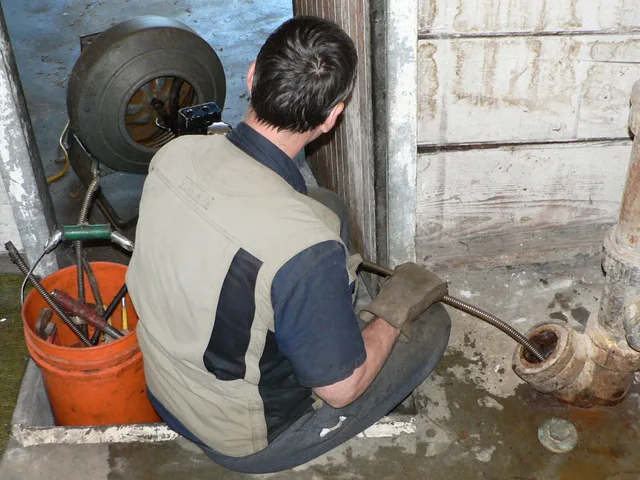
- Drain cleaning and repair work on existing systems
Mark every item your service list touches, and treat each one separately. A license class that covers drain cleaning does not automatically cover gas piping, and a service connection may sit with the water utility rather than the plumbing board.
Service Characteristics to Note
- Opening a wall
- Touching a potable supply
- Connecting to sewer or septic
- Working with fuel gas
- Excavating
The definitions are written down, and you can read them before you call anyone. Most states adopt a model plumbing code — the International Plumbing Code, published by the International Code Council, or the Uniform Plumbing Code, published by IAPMO — or a state-written code, and the adopting statute or regulation names the edition and the year. The state board's licensing statute and administrative rules define what each license class covers. Start with those two documents, then use how to start a plumbing contractor business for the service list itself.
Step 2: Identify every jurisdiction you will work in
Make a list of the towns, cities, and counties you expect to serve, plus the state. Then treat every line on that list as a separate research task until proven otherwise.
Jurisdiction Research List
- State
- Each town
- Each city
- Each county
- Treat each as separate task
This is the step people skip, and it is the one that produces expensive surprises. Two adjacent municipalities can adopt different code editions, require different local registrations, and take different views on who may pull a permit.
The five layers that govern the work
Five sets of rules sit on the same job. Each one can change what the next one means.
| Layer | Typical authority | What it usually governs | Where it catches people |
|---|---|---|---|
| State occupational licensing | State plumbing board | Who may perform and supervise plumbing work, exams, renewal | Seldom missed, and the layer everyone discusses |
| Business registration | Secretary of state, city or county | Whether the firm may trade and sign contracts | Sole operators who assume a personal license covers the company |
| Local construction regulation | Building department, code official | Which work needs a permit, who may pull it, inspections | Work started before the permit is pulled |
| Utility and water authority | Water and sewer purveyor | Service connections, cross connection control, backflow | Backflow testing, and where the utility's responsibility ends |
| Federal and state program rules | Various agencies | Employment, safety, environmental programs, tax | Lead renovation in older housing, and rules after the first hire |
Each layer has an owner you can name and call: the state plumbing board — often titled State Board of Plumbing, or sitting as a division inside a department of licensing or consumer affairs — the local building department or code official, the water or sewer utility, the state or local fuel gas authority, and the business filing office, usually the Secretary of State, for the entity itself. Ask the office that issues the credential, not a forum.
Three questions people run together
What may I personally do?
What may the firm contract for?
What does this job need before it may start?
Keep the three answers apart. Merging them is how a firm ends up believing it is covered when it is not.
Step 3: Ask each office, in writing where possible
For each jurisdiction, contact the offices below and record the answers.
Offices to Contact
- State licensing board
- Local building department
- Water and sewer authority
- State fuel gas agency
- The state licensing board.Which license class covers each service on your list — apprentice, journeyman, master, or a residential or drain-layer class — and what experience, examination, and continuing education each requires. Whether the business needs its own contractor license, a registration, or a qualifying individual named on a form. What supervision arrangements apply to people working under you. Which examination is required and who administers it: most boards write their own or contract with a testing vendor, and the exam is drawn from the state rules and from the adopted code edition published by the International Code Council or IAPMO.
- The local building department.Which of your services require a permit here, and which permit — plumbing, gas, water and sewer connection, or right-of-way. Who may pull it, the licensed individual or the firm. Which code applies, and which edition: the International Plumbing Code or the Uniform Plumbing Code, and the year.
- The water and sewer authority.What applies to service lines, backflow prevention, and cross connection control, whether the utility runs its own cross-connection control program, which tester credentials it accepts for backflow assembly testing — ASSE, ABPA, and IAPMO certifications are the common ones — and who may perform and file the test report.
- The state agency for fuel gas work, if that is on your list, since it is frequently a separate credential with its own exam and renewal cycle.
Ask for the answer by email or letter. A written answer from the issuing office is worth far more than a phone note, and it is what you will want if the question is reopened later.
Step 4: Build the dossier
Keep one file per credential and one per jurisdiction. Each credential file holds the certificate, the number, the issue and expiry dates, the renewal requirements, the continuing education record, and the correspondence that established what it covers.
Dossier Contents
- Certificate and number
- Issue and expiry dates
- Renewal requirements
- Continuing education record
- Correspondence on coverage
- Permit requirements, date, office, person
Each jurisdiction file holds the permit requirements you were told, the date, the office, and the person's name. Requirements change, and a record of what you confirmed and when is the difference between a mistake and a pattern.
A credential you cannot evidence on demand is a credential you do not have when it matters.
Step 5: Confirm the crew, not just the owner
Owners research their own license and stop. The second person changes the question.
Crew Questions for the Board
- What can apprentice do unsupervised?
- What counts as supervision?
- Do ratios apply?
- What must be reported on join/leave?
Then check that your actual crew structure matches, on paper, before it matters: which class each person holds, who supervises whom, the journeyman-to-apprentice ratio the state allows, and what work an apprentice may do without direct supervision. Those answers live in the board's rules, and they are what your payroll, your insurance, and your job assignments have to follow. How this shapes hiring and progression is covered in plumbing contractor hiring and training.
Step 6: Check what your equipment and work bring with them
Some capabilities carry their own requirements independent of your plumbing license.
Work that disturbs painted surfaces in older housing and child occupied facilities falls under the Environmental Protection Agency's renovation, repair and painting requirements for contractors, which describe certification as a Lead-Safe Certified Firm and specific work practices for certified renovators. Determine whether your services reach that threshold.
Excavation, confined space entry, and hot work carry safety obligations. Confirm and build them into a program before the first job that involves them; for construction work, the excavation and trenching rules sit in 29 CFR 1926, Subpart P. The Occupational Safety and Health Administration's recommended practices for safety and health programs give the structure to hold them in.
Equipment decisions that pull these requirements in are discussed in plumbing contractor equipment and setup.
Step 7: Check the public-facing side
If you operate an office or counter open to the public, accessibility obligations apply. The Department of Justice's ADA guide for small businesses explains what that generally involves for a small operation, and it also frames the question of how a customer who cannot use one channel reaches you.
The same public-facing test applies to what you claim. Every state board keeps a license lookup or register that shows name, license number, class, and status, and that is what a customer or a general contractor checks first. Confirm your own entry is current, and confirm whether the firm's registration appears there too.
Working across state lines
Reciprocity exists in some places and is usually narrower than the word suggests. There is no national plumbing license and no interstate compact that carries a plumbing license from one state to another; what exists is reciprocity or endorsement granted board by board. It may cover the examination but not the experience requirement, or one license class but not another, and it rarely covers local registrations.
Ask both boards directly, and ask three questions: whether the credential is recognized, what additional steps apply, and how long the process takes. Then ask the local building departments in the new state separately, because the state answer says nothing about them.
Renewals, and the calendar that prevents a lapse
Put every renewal date in one place, with a reminder well ahead of it, and record what each renewal requires. Continuing education is often the item that causes a lapse, because it has to be completed before the renewal rather than at it.
A lapsed license is not only an administrative problem. It can affect your insurance, your ability to pull permits, and any contract that requires you to be licensed throughout. Keep the register in one place, with the issuing body, the renewal date, the continuing education due before it, and the name of the person who owns each row.
What you may say about your license
Once you have the answer, be precise in how you state it publicly. A licensed individual and a licensed firm are different claims. A credential that covers one class of work does not cover another. Certifications from trade bodies are not licenses and should not be presented as though they were.
Customers do not distinguish between these unless you do, and an imprecise claim is a claim you may have to defend. How to describe credentials accurately in customer-facing material is covered in plumbing contractor marketing and growth.
Common questions
How long does licensing take?
Ask the board for its current processing time, and ask separately about examination scheduling, which is often the longer wait. Boards publish application checklists and fee schedules; work from those rather than from timelines in other people's experience, which age quickly.
Can I work while my application is pending?
That is a question only the board can answer, and the answer differs by state and by license class. Some states issue a temporary or provisional credential, or allow an applicant to work under a licensed master; many do not. Do not infer permission from the absence of a prohibition — put the question in writing and keep the reply.
Do I need a license to do minor repairs?
Some jurisdictions carve out limited work; many do not. Where a carve-out exists it is written into the licensing statute or the adopted plumbing code, and it is usually narrow and specific. Ask rather than assume, and get the answer in writing.
What if I discover I have been working outside my license?
Stop that work and get advice from someone who practices in this area in your state. Boards handle unlicensed-practice complaints through a formal disciplinary process, and voluntary disclosure before a complaint is generally treated differently from discovery afterward, but how differently is a legal question rather than a general one.