Guides
Trenchless Sewer Repair Cost vs Traditional: What Drain Contractors Should Bid
Trenchless sewer repair cost runs about $60 to $250 per foot in US metro bids, against $50 to $150 for open cut, plus permits. Here is how to bid both.
What to take away
- Trenchless sewer repair cost in US metro bids runs roughly $60 to $250 per foot, while open-cut replacement runs roughly $50 to $150 per foot, before permits and restoration.
- Pipe lining suits laterals 4 to 8 inches in diameter with few connections; pipe bursting suits undersized or badly deformed pipe where you want a same-size or larger bore.
- Open cut still wins on short runs, shallow pipe, and jobs where the customer will not sign a restoration waiver.
- Every method shares one limitnone of them fix a failing subgrade, a sagging grade, or a broken municipal connection you do not own.
What is being compared
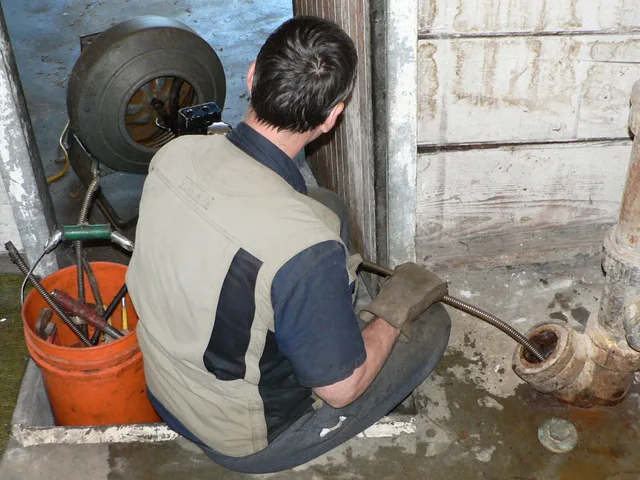
Three repair routes compete for the same residential and light commercial laterals. Open-cut excavation removes the old pipe and lays new. Cured-in-place pipe lining inserts a resin-saturated felt tube and cures it in place. Pipe bursting pulls a bursting head through the old pipe while dragging new HDPE behind it.
Each route carries different equipment cost, crew size, permit burden, and restoration liability. A drain contractor bidding all three needs a per-foot number that survives the job, not a brochure number. The technical overview of cured-in-place pipe lining explains why lining reduces the bore slightly, which matters when the pipe is already undersized.
The criteria that matter
Judged on the axes that actually move a bid:
Bid Criteria by Repair Route
Open cut
- Cost per foot
- $50-$150
- Crew size
- 3-5
- Trench length
- Full run
- Bore change
- None
- Restoration liability
- High
- Equipment entry cost
- $40k-$120k
CIPP lining
- Cost per foot
- $80-$250
- Crew size
- 2-3
- Trench length
- Access pits
- Bore change
- Slight reduction
- Restoration liability
- Low
- Equipment entry cost
- $60k-$180k
Pipe bursting
- Cost per foot
- $60-$200
- Crew size
- 3-4
- Trench length
- Access pits
- Bore change
- Same or larger
- Restoration liability
- Low
- Equipment entry cost
- $90k-$250k
Open cut
- Typical cost per foot (illustrative)
- $50 to $150
- Crew size
- 3 to 5
- Trench length
- Full run
- Bore change
- None
- Restoration liability
- High
- Equipment entry cost (illustrative)
- $40,000 to $120,000
- Best pipe condition
- Any
CIPP lining
- Typical cost per foot (illustrative)
- $80 to $250
- Crew size
- 2 to 3
- Trench length
- Access pits only
- Bore change
- Slight reduction
- Restoration liability
- Low
- Equipment entry cost (illustrative)
- $60,000 to $180,000
- Best pipe condition
- Cracked, root-intruded
Pipe bursting
- Typical cost per foot (illustrative)
- $60 to $200
- Crew size
- 3 to 4
- Trench length
- Access pits only
- Bore change
- Same or larger
- Restoration liability
- Low
- Equipment entry cost (illustrative)
- $90,000 to $250,000
- Best pipe condition
- Deformed, root-crushed
Figures are illustrative ranges for budgeting, not quotes. Confirm current material pricing with your supplier before you submit.
Option by option
Open cut. A backhoe, a trench shield, and a pipe layer. You see the whole defect, which is worth something on a collapsed line with unknown geometry. Excavation protection is not optional: OSHA's requirements for protective systems in excavations govern shields, sloping, and benching on every sewer trench you open.
CIPP lining. Two access pits, a liner, a cure. Driveway and lawn damage is minimal, which shortens the customer conversation. The trade-off is bore reduction and a surface that later root cutting can score.
Pipe bursting. The most capital-intensive route. It replaces the pipe rather than coating it, so it fixes deformation lining cannot. It also needs a receiving pit and a pulling force that can damage nearby utilities if locating is sloppy.
Where each one wins
- Bid open cut when the run is under 30 feet, the pipe is shallow, and the customer accepts restoration.
- Bid CIPP lining when the lateral is 4 to 8 inches, structurally sound in shape, and root-intruded at joints.
- Bid pipe bursting when the old line is undersized, deformed, or the customer wants a larger bore to the main.
- Bid open cut again when the defect sits under a municipal sidewalk with a restoration schedule you cannot control.
Example: three metro bids
A 60-foot lateral, 4-inch clay, root intrusion at four joints, no collapse.
60-Foot Lateral Bids by City
- Suburban Denver lining$9,500
- Suburban Denver open cut$7,200
- Seattle lining$13,000
- Seattle bursting$11,000
- Seattle open cut$9,800
- Boston lining$15,000
- Boston open cut$12,500
These are illustrative case figures for a comparison exercise, not published market data. Permit and restoration costs, not pipe, separate the cities. Before you build a bid on any of them, check the sample plumbing contractor quotes and the template behind them for new owners so the line items match what you will actually invoice.
Equipment math for a drain contractor
Trenchless equipment only pays back if you can keep it busy. A lining rig needs roughly 40 to 60 jobs a year at metro pricing to justify the capital, by most contractor rules of thumb. Pipe bursting needs fewer jobs but larger ones.
If you run a two-truck drain operation, subcontracting lining to a specialty crew often beats buying. Track your close rate on trenchless bids before you commit, and read what matters most in plumbing contractor complaint handling because restoration disputes, not pipe failures, are what sour these jobs.
What none of them solve
No method repairs a failing subgrade, a flat or reverse grade, or a broken connection at the municipal main that you do not own. Lining and bursting both need a structurally continuous host pipe or a clean burst path. Open cut exposes the problem but still cannot fix soil movement under a driveway.
All three also share the same safety obligation at the manhole. Sewer entry is permit-required confined space work, and OSHA's confined space pre-entry checklist applies whether your crew is lining or digging.