Guides
Plumber insurance requirements for drain cleaning contractors
Plumber insurance requirements for drain cleaning contractors: how licenses, bonds, certificates of insurance, and confined space rules change state to state.
Plumber insurance requirements for drain cleaning contractors
What to take away
- Crossing a state line triggers three checksthe state or local trade license, the insurance certificate the hiring party demands, and the bond or surety the local jurisdiction requires.
- License reciprocity between states is narrow. Most US boards do not accept another state's plumbing license without a written agreement or a separate exam.
- Commercial drain jetting carries more risk than residential drain cleaning: high-pressure water can damage pipes, laterals, and mains, and manhole entry is a permit-required confined space.
- Coverage is shown on a certificate of insurance, normally the ACORD 25 form, with endorsements for additional insured, waiver of subrogation, and primary and non-contributory wording when the hiring contract asks for them.
- No national dollar limit applies to general liability or commercial auto. The limits come from the hiring contract and the carrier, and workers compensation benefits are set by state statute.
- A certificate of insurance must name the correct additional insured, show the right coverage, and match the state where the work occurs.
- Canadian border city contractors need a US state license, cross-border insurance, and GST/HST treatment. The cross-border plumbing contracting guide explains the paperwork.
Licensing across US state lines
A plumbing contractor license comes from a state or local board, not a national body. California uses the Contractors State License Board for a C-36 Plumbing Contractor license. Texas uses the Texas State Board of Plumbing Examiners.
State License Boards Compared
California
- Board
- Contractors State License Board
- License
- C-36 Plumbing Contractor
- Reciprocity
- Limited endorsement
- Drain cleaning
- Under plumbing license
Texas
- Board
- State Board of Plumbing Examiners
- License
- Plumbing Contractor License
- Reciprocity
- Limited endorsement
- Drain cleaning
- Under plumbing license
Reciprocity is limited. Some states grant a license by endorsement to a master plumber with a current license and verified experience. Other states require the full trade exam even for an experienced contractor from a neighboring state.
Drain cleaning is not always a separate license. In many states it falls under the plumbing contractor license. In others, a drain layer or sewer contractor registration applies. Check the state board, county health department, and city building department before quoting across a state line.
Bond requirements for drain cleaning contractors
Bond requirements are local. A state license may require a surety bond, and a city may require a separate drain layer bond. California's Contractors State License Board lists a $25,000 contractor bond.
Bond vs Insurance vs License
Bond
- Purpose
- Protects customer or jurisdiction
- Issued by
- Surety company
- Proof
- Bond form
- Example
- $25,000 contractor bond
Insurance
- Purpose
- Covers liability and workers
- Issued by
- Insurance carrier
- Proof
- Certificate of insurance
- Example
- General liability policy
License
- Purpose
- Authorizes trade work
- Issued by
- State or local board
- Proof
- License card
- Example
- C-36 Plumbing Contractor
A bond is not insurance. It protects the customer or jurisdiction if the contractor fails to meet code or pay certain obligations. The contractor usually pays a premium, and the bond amount stays as a separate line on the compliance file.
For drain cleaning, a bond may be paired with a permit bond when a crew opens a street or connects to a municipal sewer. Ask the local public works department which bond form it accepts.
A bond, a license, and a policy are three separate documents. A certificate proves none of them.
Insurance for commercial drain jetting
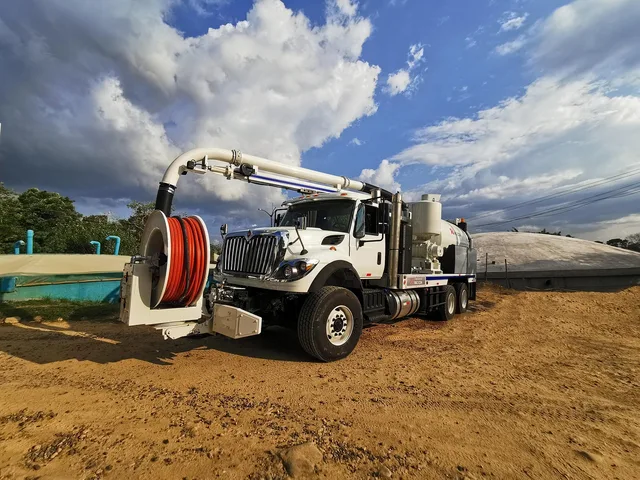
Commercial drain jetting uses high-pressure water to clear grease, roots, and scale. The work can damage pipes, private laterals, and municipal mains. It also puts a crew at a manhole, which is a permit-required confined space under OSHA rules.
The permit-required confined spaces standard, 29 CFR 1910.146, sets the entry permit, atmospheric testing, and rescue requirements for sewer work. See the permit-required confined spaces standard for the baseline.
Insurers treat commercial jetting differently from residential snake work. A carrier may ask about pressure ratings, hose length, camera inspection, and whether the crew enters the manhole. Workers compensation coverage must match the state where the employee works, not only the company's home state.
Pollution coverage for jetting and sewer work
General liability policies exclude pollution, and jetting moves grease, sewage, and debris that can back up into a building or reach a storm drain. Carriers often require a separate pollution or environmental liability policy or an endorsement before a jetting subcontract is signed. Ask the carrier in writing whether the policy responds to a sewage backup or a contamination claim at the manhole.
Commercial auto and the territory rule
A commercial auto policy follows the vehicles it lists and the territory it lists. A crew that tows a jetter into another state needs that state listed or endorsed, not just the garage state. Workers compensation works the same way: the policy must cover the state where each employee works, or the employer needs an endorsement or a separate policy.
Certificate of insurance for plumbing subcontractors
A general contractor or property manager will ask for a certificate of insurance before a drain subcontractor starts. The standard document is the ACORD 25 certificate of liability insurance, and it should show general liability, commercial auto, workers compensation, and umbrella limits if required.
The certificate must name the correct additional insured, certificate holder, project address, and policy period. The additional insured status itself comes from an endorsement on the policy — CG 20 10 for ongoing operations and CG 20 37 for completed operations are the common ISO forms — and a waiver of subrogation usually needs its own endorsement, such as CG 24 04. When a contract requires primary and non-contributory coverage, that wording must appear on the endorsement, not only on the certificate. A certificate is evidence of coverage, not the policy itself. Keep the full policy and endorsements available.
If the work crosses into another state, the policy must permit that state. A workers compensation policy is state-specific, so a multistate job may need endorsements or a separate policy.
Limits and state insurance rules
There is no single national limit for drain cleaning work. General liability, commercial auto, and umbrella figures come from the hiring contract, the project owner's risk manager, and the carrier's underwriting, and the certificate lists whatever the policy carries. That is why a subcontractor reads the insurance section of the contract before agreeing to a job.
States regulate the carrier rather than the job. Each state insurance department licenses insurers and reviews the policy forms and rates they file. The California Department of Insurance and the Texas Department of Insurance are the counterparts to the license boards above, and every other state has an equivalent department. Workers compensation is different: benefits are set by state statute, and some states also want proof of coverage before they issue or renew a contractor license.
Compliance checklist for crossing state lines
Use this checklist before a drain crew crosses a state line:
- Verify the license type required by the state, county, and city.
- Confirm reciprocity or endorsement rules with the state board.
- Check the bond amount and bond form required by the local jurisdiction.
- Request a certificate of insurance on the ACORD 25 form with the correct additional insured, waiver of subrogation, and state.
- Compare the limits shown on the certificate with the limits the contract requires, including umbrella when the contract names one.
- Confirm the commercial auto policy lists or endorses the state where the vehicles will work.
- Confirm workers compensation covers the state where each employee works.
- Confirm permit-required confined space procedures and rescue plan.
- Review GST/HST or state sales tax treatment for the invoice.
The OSHA drain cleaning safety page covers entry permits and citations. OSHA also publishes a confined space pre-entry checklist that a drain crew can attach to the job packet.
Cross-border work from Canada
Canadian contractors in Ottawa, Gatineau, or other border cities often take US drain jobs. A Canadian trade certificate or Red Seal endorsement may support the application but does not replace the state license.
Cross-border insurance must cover the US state where the work occurs. Commercial auto and workers compensation need the right territory listed or endorsed on the policy. For invoicing, the Canada Revenue Agency explains GST/HST registration and place-of-supply rules, and a business number and GST/HST account are requested with the CRA's Form RC1.
Cross-border jobs also bring USD invoicing, GST/HST treatment, and border logistics. Contractors should also review plumbing contractor trends to see which demand drivers affect border city work. The plumber drain jobs board lists openings, but the compliance file still needs the state rule.