Guides
Quality control in a plumbing contractor business: how owners check the work
A plumbing contractor quality assurance checklist run at four gates during the visit, producing photographs and notes rather than a form filled in later.
What to take away
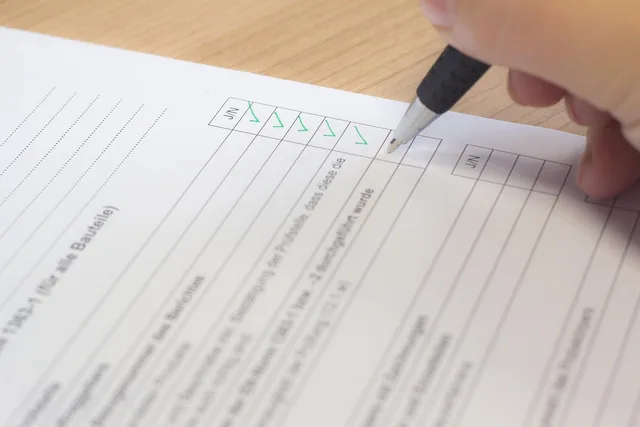
- This is a per-job checklist, run by the technician at four points in the visit rather than filled in afterward in the van.
- Four gatesbefore leaving the shop, on arrival, before closing up, and before leaving the property. Each gate catches a different kind of failure.
- A checklist completed from memory at the end of the day is a record of what someone remembers, which is not the same thing.
- The photograph gates are the most valuable lines here, because they are the only ones that produce evidence.
- Review the checklist itself quarterly. Lines that never fail should be removed, and every callback should be tested against it.
Gate 1: Before leaving
- The job record names the specific work, the location in the building, and the agreed price or model.
- Any assumption in the quote is noted, so I know what to check on arrival.
- Parts and materials for this job are aboard, including the likely second option.
- Tools for the awkward version of this task are aboard, not just the standard version.
- Permit status is knownneeded and obtained, needed and pending, or not needed here.
- Access details are confirmed, including who will be present and where to park.
- Personal protective equipment for this specific job is aboard and serviceable.
A job that leaves the shop with an unanswered question on this gate will use an hour answering it later, on the customer's time.
Gate 2: On arrival, before starting
- I have introduced myself and confirmed the customer knows what is planned.
- Photographs of the entry condition are taken, including the areas I will work through.
- The actual condition matches the quote's assumptions. Where it does not, work has not started.
- Isolation is confirmedI know where the shutoff is and that it works.
- Floor and surface protection is down before anything is carried in.
- The customer knows how long the water will be off and has agreed to that.
- Hazards specific to this site have been identified and controlled, using the structure in the Occupational Safety and Health Administration's recommended practices for safety and health programs.
The third line is the one that saves jobs. Discovering a scope difference before starting is a quote conversation. Discovering it halfway through is an argument.
Gate 3: Before closing anything up
This gate exists because everything after it is expensive to reverse.
- The work has been tested under normal operating conditions, not just visually inspected.
- Connections and joints have been checked for leaks after the system has been under pressure or in use for a reasonable period.
- Photographs of the completed work are taken while it is still visible.
- Anything found but not addressed is photographed and written into the job notes.
- Where an inspection is required, the work is in the state the inspector needs to see.
- Nothing has been concealed that a future technician would need to see.
The fourth line is the one owners most often add after losing an argument. Recording a problem you did not fix protects you and gives the customer real information.
Gate 4: Before leaving the property
- The work area is cleaner than I found it.
- All materials, packaging, and old parts are removed or disposed of as agreed.
- The customer has seen the work and heard the explanationwhat was found, what was done, what was not done, and what to watch for.
- The written summary is left or sent, including anything noted but not addressed.
- The invoice matches the quote, or the variance has been explained and approved.
- Warranty terms, with their conditions, have been stated.
- Any follow-up is scheduled before I leave, not promised for later.
What the completed checklist produces
Three things worth having.
Evidence. The photographs and notes settle scope and condition disputes without anyone's memory being tested.
A trail. A callback can be traced to the gate that should have caught it. That is more useful than knowing which technician was on the job.
A training document. The completed checklists for a job type show a new technician what good looks like on real work rather than in the abstract.
Keep them with the job record. The Internal Revenue Service standard for records that clearly show income and expenses sets the expectation for the financial documents, and the operational records belong in the same system so that one job is one file.
Reviewing the checklist itself
Quarterly, do two things.
First, take every callback from the period and ask which gate should have caught it. If none would have, add a line. If a gate should have and did not, the question is whether the line is unclear or whether it is being ticked without being performed.
Second, look for lines that never fail. A line that has never once been unticked is either genuinely automatic, in which case remove it, or it is being ticked without being checked, which is worse than not having it.
Keep the list short enough to be run honestly. A long checklist gets completed in the van, which produces a record with no information in it.
Who runs it and who checks it
The technician runs it, at the four gates, on the job. Someone else samples completed checklists against the photographs, weekly at first.
That sampling is the whole control. Without it, the checklist degrades into a formality within a month. With it, the pattern of what gets skipped tells you exactly where training is needed, job type by job type, rather than in general.
The definitions of defect, callback, and complaint that this checklist feeds sit in the service quality guide for owners. Where the work touches permits, credentials, or inspections, the standing obligations are mapped in the licensing and compliance guide.
Asking for feedback afterward
When you follow up and ask for a review, ask every customer rather than only customers you expect to be pleased. Do not condition anything on what they write.
The Federal Trade Commission's guidance on soliciting and paying for online reviews explains what is permitted, including how incentives and employee reviews are treated. What customers say publicly is the visible end of the quality system described in the marketing and growth guide.
Common questions
Is this too much for a small job?
Gates two and three apply to every job regardless of size, and take a couple of minutes. Small jobs generate a surprising share of callbacks precisely because the checks get skipped.
Should the customer see the checklist?
The summary at gate four, yes. The internal checklist itself is a working document and showing it invites a discussion about the form rather than the work.
How do I get technicians to actually use it?
Sample it, act on what the samples show, and make sure following the process is never punished. A technician who stops work at gate two and is criticized for the delay will not stop next time.
What if a gate cannot be completed?
That is the checklist working. Record what blocked it and escalate before continuing, rather than ticking the line and hoping. The sequencing that puts these habits in place from the start is described in the phased startup plan.