Guides
OSHA Drain Cleaning Safety: What Contractors Must Do Before Entering a Sewer
OSHA drain cleaning safety rules decide who may enter a sewer, what a permit must show, and what happens when a crew skips them, including fines and citations.
What to take away
- A sewer manhole is usually a permit-required confined space, and entry without a completed permit is a violation of 1910.146 in states under federal OSHA.
- The permit is a document, not a habit. It needs atmospheric test results, an attendant, a rescue plan and named entrants before anyone opens the cover.
- California and Washington run their own state plans with extra duties, so a program written for one state may not satisfy the other.
- Skipping the paperwork carries a concrete consequencecitations, and in a fatality case, a willful violation referral.
- Respirators, harnesses and gas meters are equipment decisions that follow the written program, not the other way around.
Who has jurisdiction over sewer entry
Federal OSHA covers private employers in about half the states. The rest run OSHA-approved state plans, which must be at least as effective as the federal rule but may add requirements.
California's Division of Occupational Safety and Health enforces Title 8, and its confined space rules for construction appear at sections 5156 and 5157. Washington's Department of Labor and Industries enforces WAC 296-809, which sets its own permit, training and rescue provisions. A contractor working in both states needs two programs, not one.
Municipal sewer departments add a third layer. Many cities require a separate entry authorization or a confined space entry notice before a private contractor opens a public manhole. That approval is not OSHA compliance, and OSHA compliance does not replace it.
The general industry standard at 1910.146 governs maintenance work in sewers. New construction and repair work falls under the construction standard at 1926.1201.
What triggers a permit
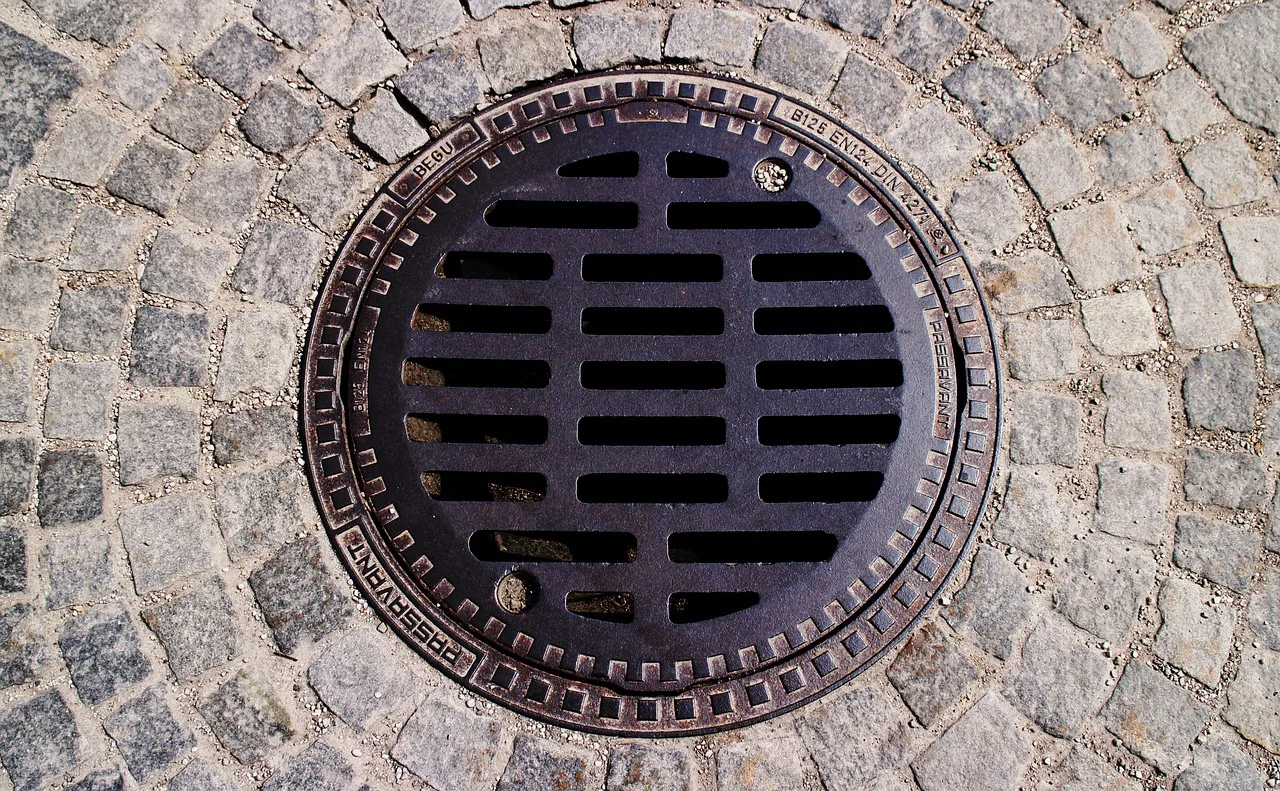
A space is permit-required when it meets the definition of a confined space and carries a serious hazard. Sewer manholes, lift stations and wet wells routinely qualify. OSHA lists sewer manholes among its examples of permit-required spaces.
Does entry require a permit?
Will a worker step through the opening?
Permit process starts
No entry permit needed
The trigger is the hazard, not the job title. If a crew is clearing a blockage from outside with a machine, no entry occurs and no entry permit is needed. The moment a technician steps through the opening, the permit process starts.
Four conditions decide the classification:
- Contains or has the potential to contain a hazardous atmosphere.
- Contains a material that could engulf an entrant.
- Has an internal configuration that could trap or asphyxiate.
- Contains any other recognized serious safety or health hazard.
Hydrogen sulfide and methane are the usual atmospheric problems in a sewer. Oxygen deficiency follows quickly in a line with heavy biological load.
What an entry permit must contain
OSHA publishes a sample permit in Appendix E of the confined space standard. A compliant permit identifies the space, the purpose of entry, the date and duration, and the names of authorized entrants and attendants.
It also records the hazards, the measures used to isolate or control them, and the acceptable entry conditions. Test results go on the permit, along with the name of the tester and the time of each test.
A rescue plan and the means to summon rescue services belong on the document. So does the communication procedure between attendant and entrant, and the equipment each entrant carries.
Permit field / What it must show
- Atmospheric results
- Oxygen, flammable gas, hydrogen sulfide, with test times
- Entrants and attendants
- Named individuals, not job titles
- Rescue
- Method, service, and response arrangements
- Isolation
- Lockout or blocking of incoming flow and energy
- Authorization
- Signature of the entry supervisor
Equipment isolation for a jetter or auger motor is a separate duty under 1910.147, and it applies even when the crew never enters the space.
Testing, PPE and rescue duties
Atmospheric testing happens before entry and continues while anyone is inside. A direct-reading meter with a pump and calibrated sensors is the usual instrument. Calibration records are part of the program.
Respiratory protection follows 1910.134 when engineering controls cannot bring the atmosphere into acceptable range. That means medical evaluation, fit testing and training for each user before the first entry.
Plumbing PPE requirements for sewer work typically include a full-body harness with a retrieval line, hard hat, eye protection, gloves, and chemical-resistant boots. A self-contained breathing apparatus may be needed for rescue or for spaces that cannot be ventilated.
Rescue arrangements are the part most contractors get wrong. OSHA's examples of rescue and emergency services describe the options, and calling 911 is not automatically sufficient. The fire department must be willing and able to respond, and the employer must confirm that in advance.
Example: a two-state program
A contractor based in Sacramento takes a maintenance contract for a retail chain with stores in Spokane. The California program covers Title 8 confined space training and a permit form built around Cal/OSHA language.
Before the first Spokane entry, the safety manager adds a Washington supplement. It covers WAC 296-809 attendant duties and the state's rescue response expectations, which differ from the California wording.
Both versions use the same pre-entry checklist. The pre-entry checklist published by OSHA is a reasonable starting point for that form, though each state plan may require additional fields.
A crew trained only on the California permit would be working outside the written program in Washington. That gap is the kind of finding an inspector records first.
What happens if you skip it
OSHA penalties are adjusted annually for inflation, so the current maximum is published on the agency's penalty page rather than fixed in the standard. Serious and willful violations carry the highest amounts, and repeat violations escalate further.
Beyond the citation, an unpermitted entry removes the paper trail a contractor needs after an incident. Without test results and a signed permit, there is no record that acceptable conditions existed. Insurance carriers treat that gap as evidence of an uncontrolled hazard.
A fatality in a sewer can also bring a state or local investigation, and some jurisdictions pursue criminal charges against employers. The permit is the cheapest part of the job.